
Congenital Cataract
 Athens EyeCare Clinicathenseyecare.gr · (+30) 210 777 8515
On this page
What is Congenital Cataract?
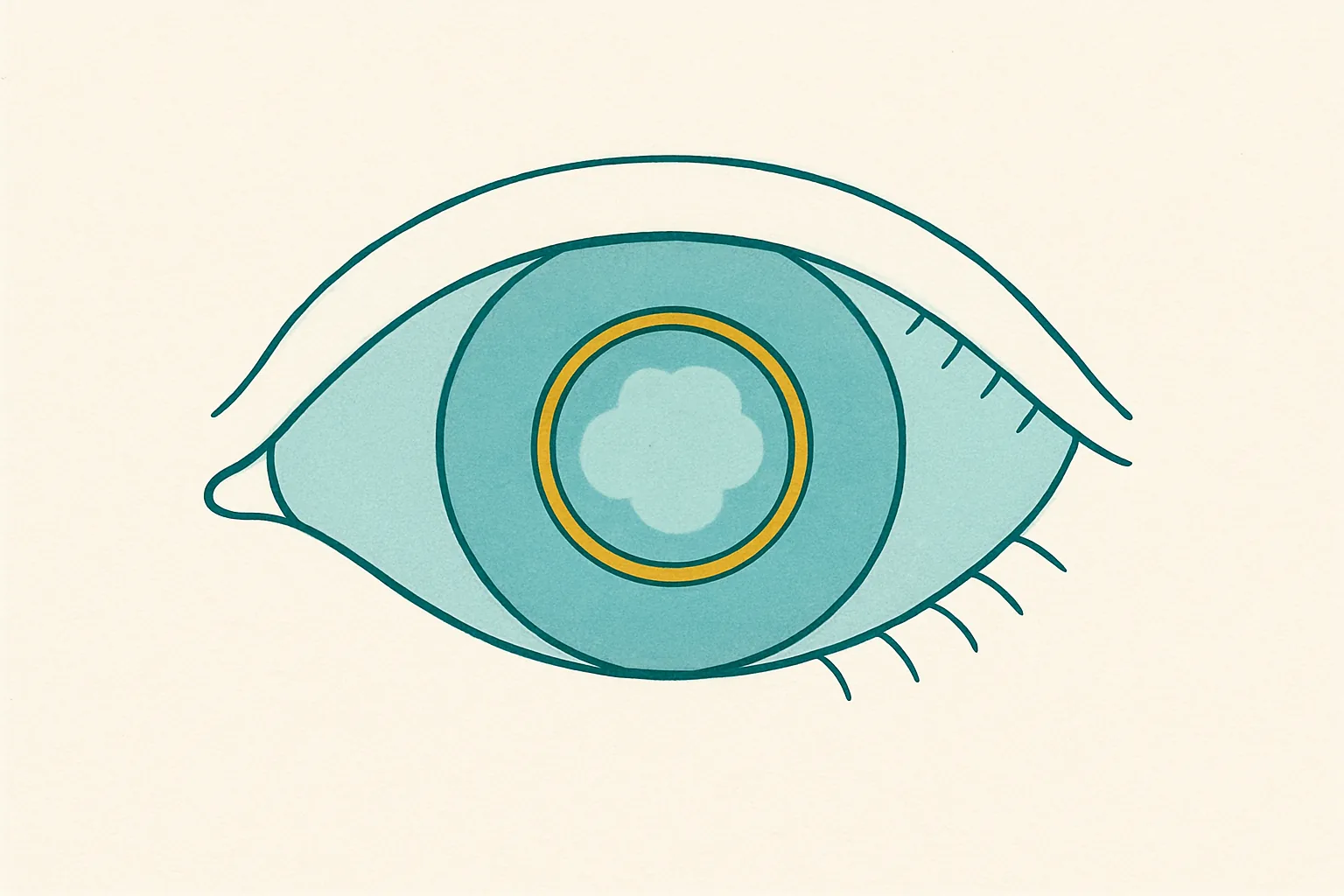
A congenital cataract is a clouding of the eye’s natural lens that is present at birth.
Depending on the density and location of the opacity, a congenital cataract may need to be removed surgically while the child is still an infant, to allow vision to develop normally and to prevent amblyopia or even blindness.
Some congenital cataracts, however, affect only a small part of the lens and do not interfere with vision enough to justify surgery.
How common is congenital cataract?
- In the United Kingdom, the incidence of congenital cataracts affecting vision has been estimated at 2.49 per 10,000 population by the age of 1 year
- Because some cases are diagnosed late, the incidence rises to 3.46 per 10,000 population by the age of 15 — equivalent to 200-300 children born with a congenital cataract in the UK each year.
What causes congenital cataracts?

Congenital cataracts can occur in newborn babies for many reasons, including hereditary diseases, infections, metabolic disorders, diabetes, trauma, inflammation or the side effects of medication.
For example, tetracycline antibiotics used to treat infections in pregnant women have been shown to cause cataracts in newborn babies.
Congenital cataracts can also develop when the mother contracts an infection during pregnancy, such as measles or rubella (the most common cause), chickenpox, cytomegalovirus, herpes simplex, herpes zoster, polio, influenza, Epstein-Barr virus, syphilis or toxoplasmosis.
Older babies and children can also be diagnosed with cataracts, known as paediatric cataracts, for similar reasons. However, trauma such as a blow to the eye is the underlying cause in 40 per cent of cataract cases in older children.
Some paediatric cataracts may in fact be congenital cataracts that simply went undetected because the child did not have their first eye examination until later in childhood.
Types of congenital cataracts
The main types of congenital cataract are:
- Anterior polar cataracts are well defined and located at the front of the lens. They are often associated with hereditary traits, and many are small and do not require surgery.
- Posterior polar cataracts are also well-defined opacities, but they appear at the back of the lens.
- Nuclear cataracts occur in the central part of the lens and are a very common form of congenital cataract.
- Cerulean cataracts (blue-dot cataracts) usually occur in both of an infant’s eyes and are distinguished by small, bluish dots in the lens. Typically, this type of cataract does not cause vision problems.
What are the symptoms of congenital cataracts?
An infant with mild cataracts often appears to have no symptoms at all, which can delay the diagnosis for years.
In other cases, a white reflection in the pupil, a lack of response to light, strabismus, an inability to follow toys and faces, or an apparent delay in development raise concern. Mild cataracts may cause photophobia only in bright light, while dense cataracts may come to light when they lead to the development of sensory nystagmus.
When does my child need cataract surgery?
Opinions vary as to when surgery should be performed on a child with congenital cataracts.
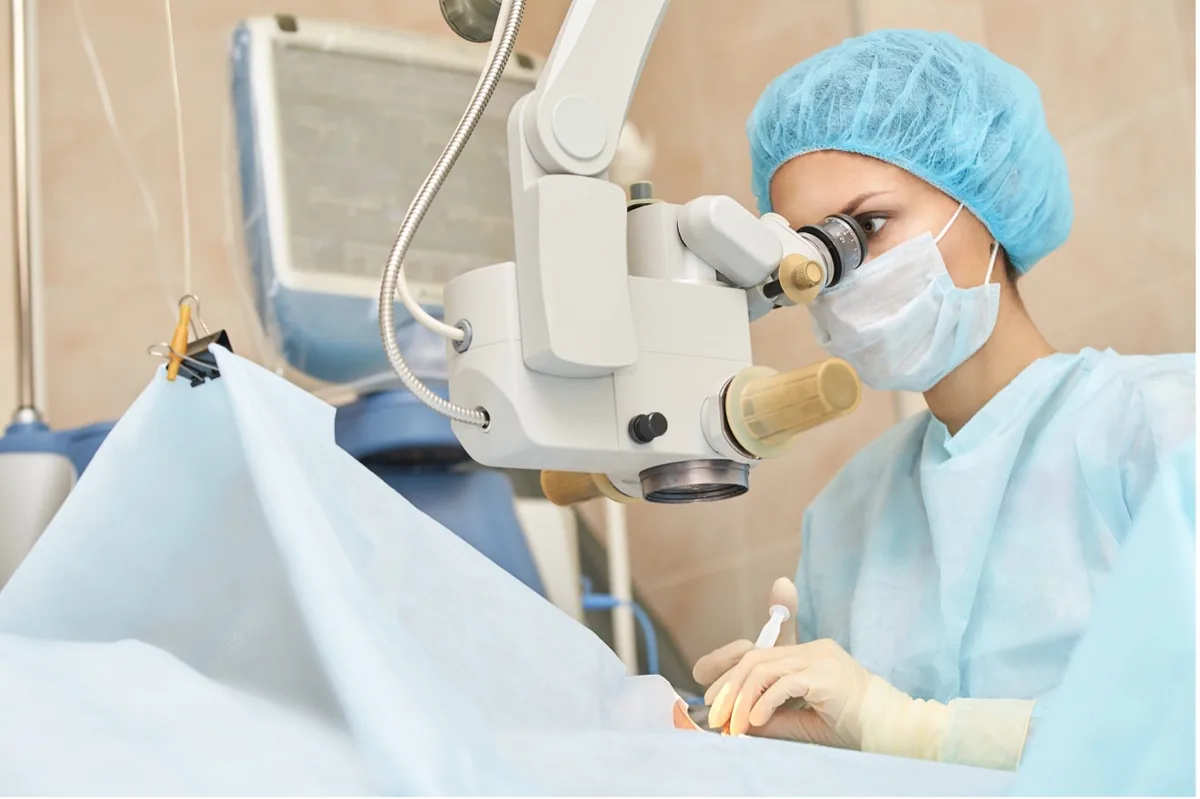
Some experts consider the optimal time to intervene and remove a visually significant congenital cataract to be between 6 weeks and 3 months of age.
If your baby has a congenital cataract, discuss any concerns you have about the timing of cataract surgery with your paediatric ophthalmologist.
Once the cataract has been removed, it is absolutely essential to correct your child’s vision with a surgically implanted intraocular lens (IOL), a contact lens or glasses. Without vision correction after cataract surgery, the eye will see poorly and the normal development of the infant’s vision will be affected.
Opinions also differ on whether an artificial lens should be surgically implanted in a baby’s eye after cataract surgery, owing to concerns that it may affect the eye’s normal development, and to the possibility of complications. An intraocular lens may also need to be removed and replaced as your child grows, because of changes in vision.
In some cases, contact lenses worn on the surface of the eye (the cornea) can help restore vision after the natural lens has been removed during cataract surgery. Glasses may also be prescribed instead of an implanted artificial lens or contact lenses.
If our optician or paediatric ophthalmologist recommends contact lenses after congenital cataract surgery, extended-wear lenses will usually be prescribed to simplify their care and handling.
Our optician or paediatric ophthalmologist will train you in how to insert and remove your child’s lenses. This can often be done while your infant or very young child is asleep.
Congenital cataracts and other vision problems
Without timely intervention, congenital cataracts cause amblyopia (lazy eye). This can in turn lead to other eye problems, such as nystagmus, strabismus and an inability to fix on objects.
Such problems can profoundly affect a child’s learning, personality and even appearance — and ultimately their whole life. For these and many other reasons, make sure your child has a routine eye examination at 6 months of age, again at three years, and once more before starting school.
Related conditions