
Retina Holes and Tears
 Athens EyeCare Clinicathenseyecare.gr · (+30) 210 777 8515
On this page
What are retinal holes and tears?
Retinal holes and tears are small breaks in the retina, the light-sensitive tissue at the back of the eye. Usually, holes and tears do not cause serious vision problems straight away. They can, however, cause problems if they allow fluid (vitreous) to leak behind the retina. If a large amount of fluid collects behind the retina, the retina can separate from the wall of the eye, and the detached part will no longer work properly. Retinal detachment is a serious condition that can lead to total blindness.
How do they occur?
Sometimes the tissues of the retina thin or weaken over time, and holes and tears can develop in these thinned areas. The vitreous (the clear gel in the centre of the eyeball) can also pull on the retina and tear it.
Eye problems that may increase the risk of retinal holes and tears include:
- myopia
- eye injuries
- cataract surgery or certain other types of eye surgery
- a family history of retinal detachment
What are the symptoms?
Retinal holes and tears sometimes cause no symptoms at all; however, the sudden appearance of many floaters and flashing lights may indicate a hole or tear.
Other symptoms may include:
- blurred or wavy vision
- a dark shadow in your peripheral vision
How is the diagnosis made?
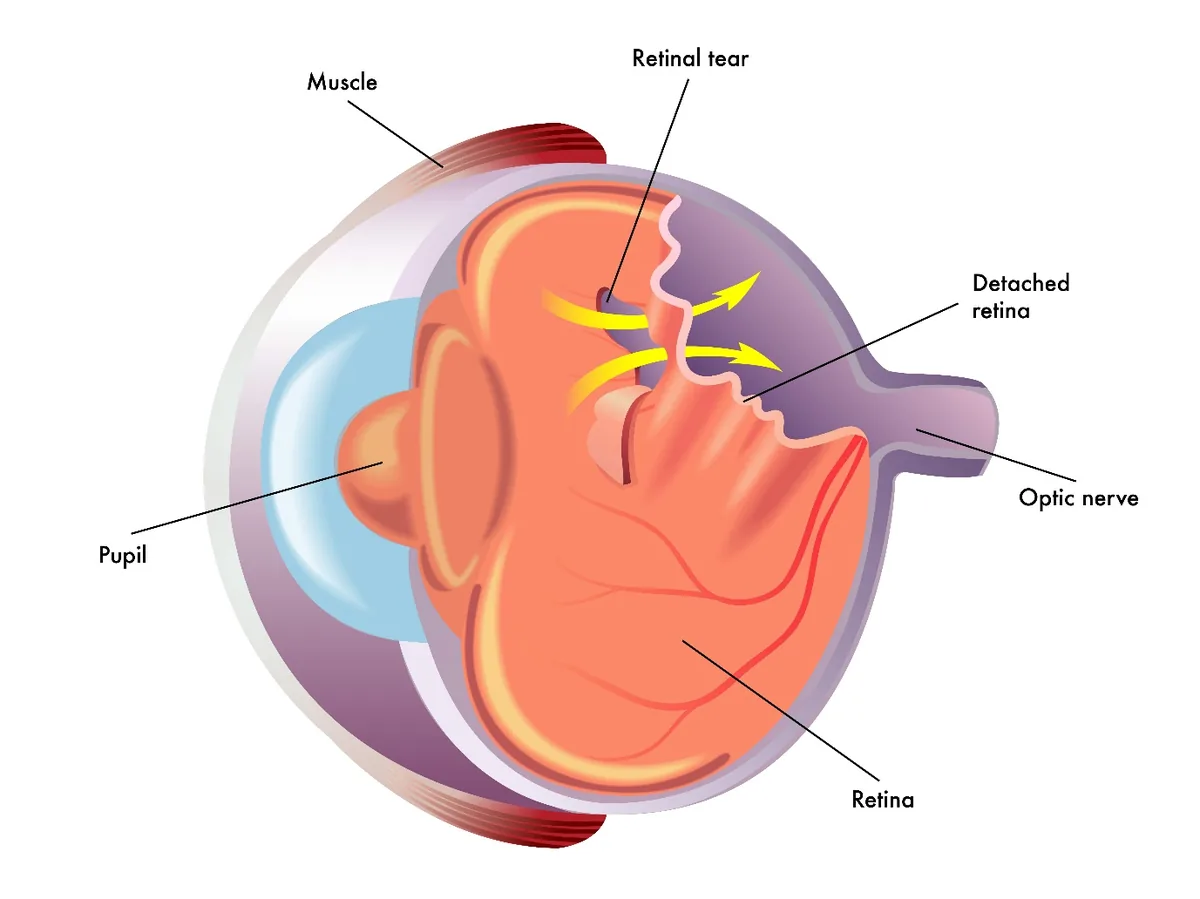
Your ophthalmologist dilates your pupils with eye drops and then examines your eyes with an ophthalmoscope, an illuminated instrument for viewing the inside of the eye.
How are they treated?
Your doctor will seal the retinal holes and tears so that they do not enlarge and the retina does not detach completely. The main form of treatment is:
Laser photocoagulation. Highly focused beams of light seal the tissue around the hole or tear. The procedure is generally quick and painless. Your pupils will be dilated for it, and you can go home immediately afterwards; your vision may be blurry for a couple of hours.
Treatment for retinal holes and tears is usually successful. However, a new hole or tear may develop in another part of the eye later on, so you should have your eyes examined regularly.
How can retinal tears and holes be avoided?
Apart from protecting your eyes from injury, there is no way to prevent retinal holes and tears. You can, however, help prevent blindness by visiting your ophthalmologist for regular check-ups, and as soon as you notice any symptoms of a hole or tear.
Related conditions