
Thyroid Eye Disease
 Athens EyeCare Clinicathenseyecare.gr · (+30) 210 777 8515
On this page
What is Thyroid Eye Disease?
A systemic disease is one that affects many organs in the body — and that can include the eyes. Thyroid Eye Disease (TED) is one such disease, causing an inflammatory response in the eyes and the surrounding tissues.
TED is an autoimmune reaction that causes swelling of the tissues of the eye — the eye muscles, the lacrimal glands, the eyelids and the fatty tissue.
In some cases the changes are so pronounced that the eyes can no longer move in line with each other.
As well as the eye disease, about 90% of sufferers also have a condition affecting the thyroid gland, known as Graves’ disease. This tends to occur when the thyroid is overactive — known as hyperthyroidism — though rarely it can involve an underactive gland (hypothyroidism). TED can also occur in people whose thyroid functions normally.
Because the condition is complex, anyone with TED should have a treatment plan managed jointly by a specialist ophthalmologist and an endocrinologist (thyroid specialist).
How do I know if I need an Ophthalmologist specialising in Thyroid Eye Disease?
Thyroid eye disease is often misdiagnosed at first, because some of its symptoms closely resemble those of other conditions, such as hay fever, allergies or conjunctivitis. As TED can have a significant impact on a patient’s quality of life, expert assessment should be sought at an early stage to establish the problem.
Thyroid eye disease, along with other systemic eye diseases, is best diagnosed through the specialist service offered at our ophthalmology centre.
What are the symptoms?
Symptoms that should prompt you to seek advice from an ophthalmologist specialising in thyroid eye disease include:
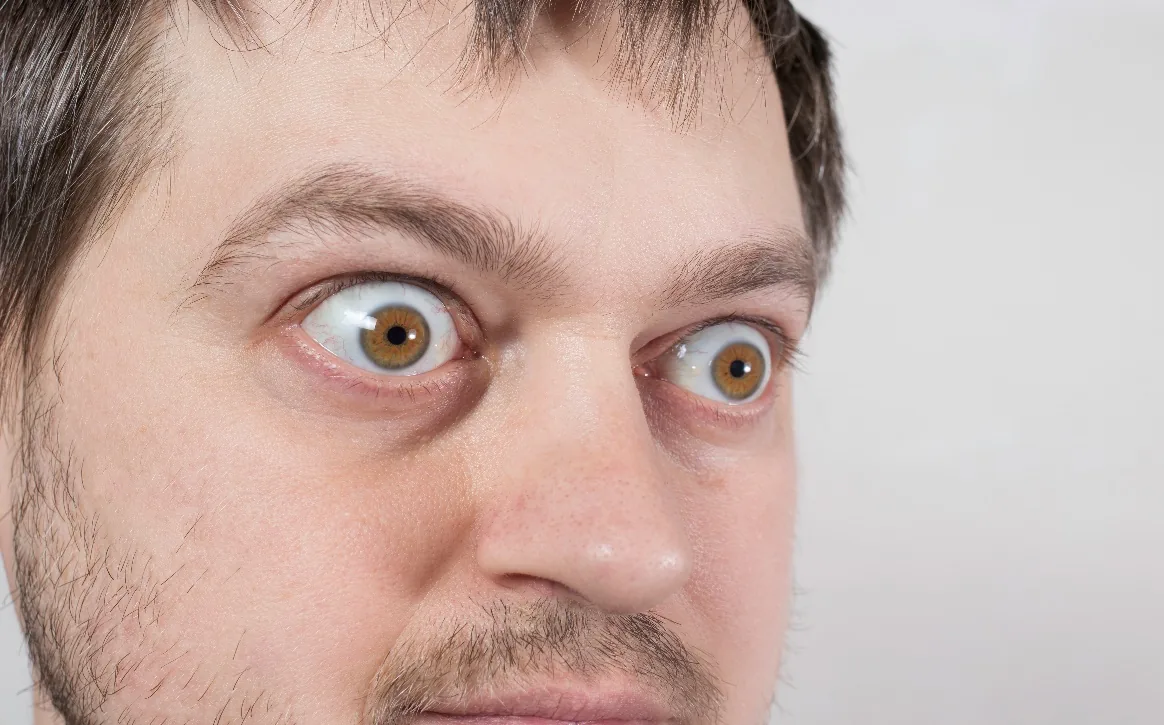
Changes in the appearance of the eyes: swelling or protrusion
Swelling: both the upper and lower eyelids can be affected
Pain: behind or in the eye, which may be more noticeable when looking down, up or to the side
Dry or gritty eyes
Difficulty moving the eyes
Redness: of the eyes themselves and/or around the eyelids
New bags under the eyes
Photophobia: intolerance of bright light
Blurred vision, including double vision
Watery eyes
Headaches: as the swelling increases it can cause pressure pain or a deep headache, which usually worsens when you move your eyes
What happens during the treatment of Thyroid Eye Disease?
There are various treatments for Thyroid Eye Disease, ranging from drug therapy to surgery. The most suitable approach for your condition will depend on many factors, and will be agreed in discussion with you and in collaboration between your ophthalmologist and your endocrinologist.
TED follows a two-phase course. The first, known as the active phase, is when the symptoms worsen; they then subside as the condition enters the second, more stable phase. The active phase usually lasts one to three years (longer in smokers), after which the condition stabilises. Early treatment is the key to reducing the severity of symptoms.
Treatment options
Treatment options include:
Restoring normal systemic thyroid hormone levels: various drugs are used to regulate the production of thyroid hormones; other options include radioactive iodine ablation or thyroidectomy.
Steroid therapy: to reduce inflammation and swelling of the eye tissues. This can be given as oral steroids (such as prednisolone) or, if these prove ineffective, as intravenous steroid therapy.
Orbital radiotherapy: usually used alongside steroid therapy, this involves targeting the tissue behind the eyeball with a controlled beam of radiation to reduce pressure in the orbit.
Surgical orbital decompression: if the swelling becomes too severe, it can put pressure on the optic nerve. There are many different approaches to this procedure, all aimed at relieving pressure on the optic nerve and its blood supply.
Treatment of eyelid retraction: this can be managed non-surgically (with steroid injections, fillers or Botox) or with surgery to relieve the tension. One such treatment is blepharotomy, in which a small incision is made in the eyelid to help it lengthen and close properly.
Correction of strabismus: strabismus can develop from swelling and tightening of the eye muscles. It is generally treated with prismatic lenses; if these are unsuitable or unsuccessful, strabismus surgery may be needed.
How can a Thyroid Eye Disease specialist help with this condition?
Regular assessment and treatment are essential during both the active and the stable phases of Thyroid Eye Disease. Although it is rare for TED to cause permanent problems with vision, this becomes more likely if the condition is left untreated.
There is no doubt that Thyroid Eye Disease can affect quality of life. Symptoms include double vision, the development of ulcers on the eye (corneal ulcers) if the eyelid cannot close properly and — in untreated, severe cases — compression of the optic nerve, which can cause loss of vision.
As well as prescribing medication and performing any necessary surgery, a specialist will advise on other factors that have a direct impact on the severity and progression of the disease. These include:
Stopping smoking: smokers are affected far more severely by TED than non-smokers. Not only are they more likely to develop it in the first place, but the condition lasts longer, the symptoms are more pronounced and the risk of permanent damage to vision is higher.
Other lifestyle changes: such as reducing your salt intake, sleeping with your head elevated and wearing sunglasses.
Dry eye management: you may be prescribed eye drops or ointment to keep your eyes moist.
Pain relief: either over-the-counter medicines or prescription analgesics.